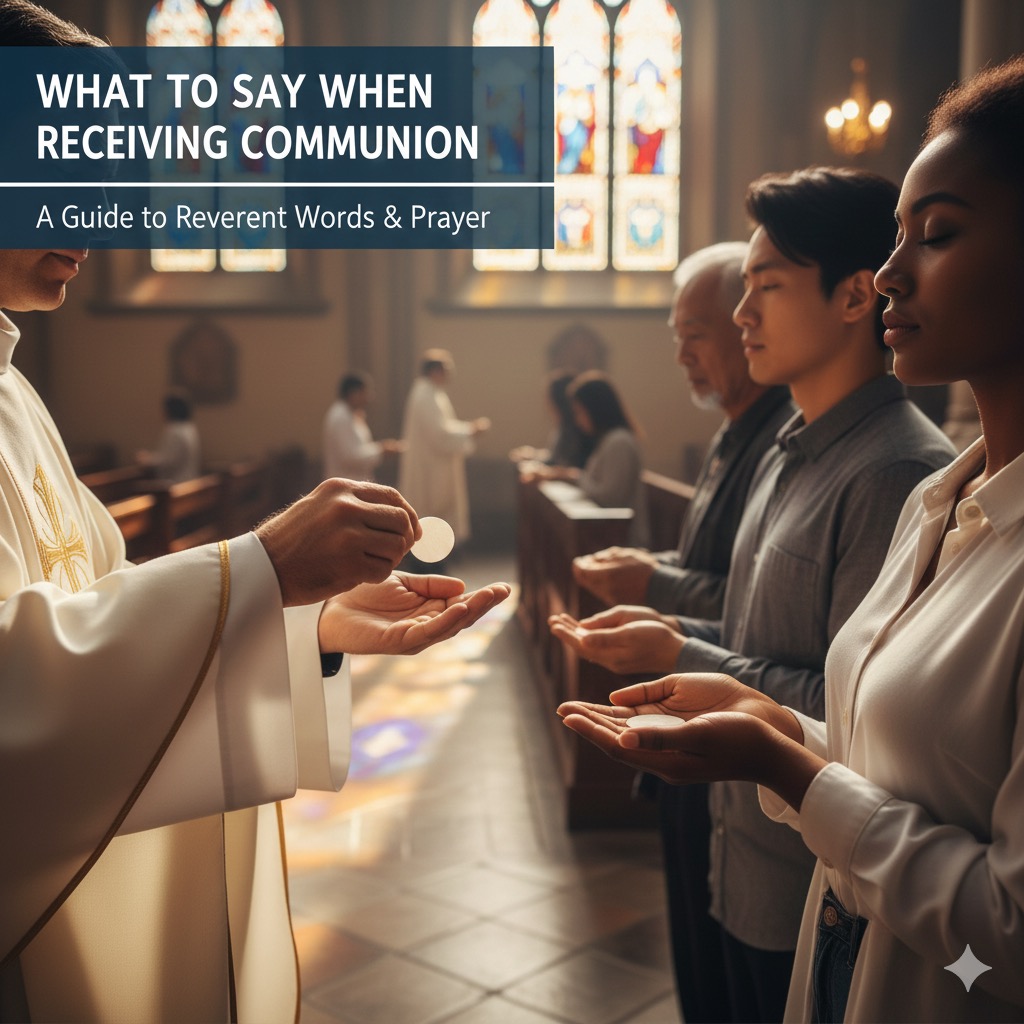
Knowing what to say when you receive communion can feel unexpectedly difficult. The moment is brief, often public, and layered with personal faith, tradition, and etiquette — so you may worry about saying the wrong thing or about seeming unprepared.
Simple wording helps because it keeps your focus on the meaning of the sacrament rather than on performance. Short, sincere phrases are easy to remember, respectful of the liturgy, and comforting to both you and the minister.
This article gives practical, ready-to-use examples for common situations, explains why the moment matters, lists what to avoid, and offers quick tips for tone and timing. Use the options that match your tradition and conscience.
Why This Moment Matters
Receiving communion is usually a deliberate, symbolic act that communicates devotion, gratitude, or belonging. Because it is both communal and intimate, your words and posture help shape the experience for yourself and others.
People bring different backgrounds and levels of comfort to the altar rail or communion line. Some speak a brief prayer aloud, others prefer silence, and many seek a phrase that expresses reverence without drawing attention.
Keeping your response simple reduces the risk of awkwardness and allows the focus to remain on the sacrament rather than on delivery. A few thoughtful, humble words can be both meaningful and appropriate in almost any setting.
Useful Things to Say
Simple Responses
- Amen. A concise, traditional affirmation that acknowledges the sacramental words spoken over you.
- Thanks be to God. A short expression of gratitude that fits many liturgical traditions.
- Lord, have mercy. A brief plea that conveys humility and openness before receiving.
- Peace. A one-word response that signals inward calm and readiness to receive.
Supportive Responses
- Thank you, Lord. A direct expression of gratitude that is warm without being elaborate.
- Receive me, Lord, and help me follow you. A short, practical request for spiritual guidance after communion.
- Make me more loving and patient. A simple commitment to live out what the sacrament signifies.
- I receive this for the healing of my family. A focused intention that grounds the moment in a concrete concern.
Empathetic Responses
- I bring my brokenness to you. A humble admission that allows space for consolation.
- Hold my grief with me as I receive. A gentle way to connect the sacrament to current sorrow.
- Help me to forgive as you forgive. A phrase that acknowledges emotional work and seeks transformation.
- I’m here trusting you with my doubts. A truthful, validating statement for when faith feels uncertain.
Light, Warm Responses
- Thank you — I needed this. Friendly and human without being overly familiar in a sacred setting.
- Blessings to you. A short, kind remark you can offer the minister or person beside you.
- Peace and joy to all. A gentle wish suitable for communal settings like holiday services.
- Grateful for this moment. A warm, succinct recognition of the sacrament’s significance.
Faith-Based Responses
- Lord, I am not worthy that you should enter under my roof, but only say the word and my soul shall be healed. A traditional prayer of humility rooted in scripture and common in many Christian antecedents; use it reverently if it fits your practice.
- May the Body and Blood of Christ keep me in eternal life. A phrase used in some traditions; it acknowledges belief in the sacrament’s spiritual benefit.
- Come, Holy Spirit; renew and strengthen me. A short invocation suitable before or after receiving to invite the Spirit’s presence.
- For the Church, for my family, for those who suffer — receive these intentions with me. A prayerful way to unite personal petitions with the communal nature of the sacrament.
What Not to Say
- Don’t make a public theological argument or correction, as the communion line is not the place for debate.
- Avoid long personal confessions that turn the moment into a monologue.
- Don’t use joking or flippant language about the sacrament, which can be disrespectful to others.
- Avoid asking the minister for detailed explanations during distribution; save questions for afterward.
- Don’t draw attention to someone else’s worthiness or actions while receiving.
- Avoid political or divisive comments that shift focus away from the spiritual act.
Helpful Tips for Handling the Moment
- Match your tone to the service: quieter in solemn liturgies, slightly warmer in casual gatherings.
- Keep your phrase short — one line is usually enough.
- Listen to the minister’s cues; in many traditions the minister announces what to say or when to respond.
- Use neutral eye contact and a modest posture; a slight bow or head inclination is often appropriate.
- If you cannot receive, cross your arms over your chest to indicate you would prefer a blessing.
- Be mindful of cultural and denominational customs; follow local practice when in doubt.
- Respect others’ ways of receiving; silence is a valid and reverent choice.
- If you feel nervous, focus on breathing and a single short prayer phrase you have rehearsed.
Final Thought
You do not need a perfect line to make communion meaningful. A few sincere, simple words that reflect humility, gratitude, or intention are more than enough. In the end, your presence and sincerity matter far more than flawless phrasing.
Let us know in the comments if this has helped or if you’ve got suggestions we can include
About the Author
Helen Bach is a relationship expert and writer who helps people find the right words when it matters most. She studied English and English Literature at the University of Michigan, where she developed a passion for how language shapes love, conflict, and connection.
At whattosaywhen.net, Helen writes clear, down-to-earth advice on what to say in real-life situations—from first dates and tough conversations to breakups and makeups. Her goal is simple: to make talking about feelings less awkward and a lot more honest.
 What to Say When
Leave a comment