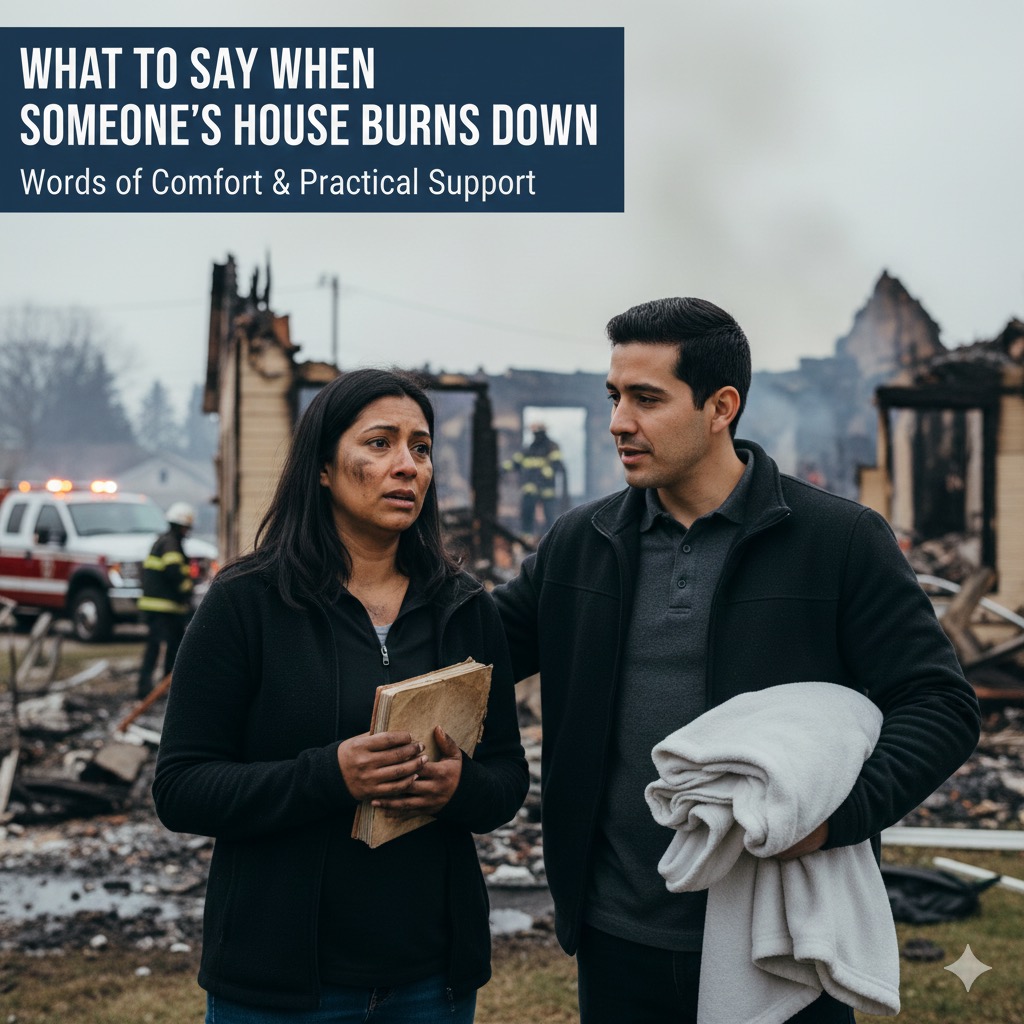
It’s an unusual one thank goodness but it does happen! When someone’s house burns down, people often freeze because they don’t know whether to focus on emotions, logistics, or both. You may worry about saying the wrong thing, sounding trite, or opening a wound you can’t fix. That hesitation is normal.
Simple, direct wording helps because it feels honest and usable in a tense moment. Short phrases reduce the risk of accidental minimization and make it easier for the person to respond or accept help.
This article gives practical phrases you can use, explains why this moment matters, points out what to avoid, and offers clear tips for how to be present in a helpful way.
Why This Moment Matters
A house fire threatens more than a structure; it often upends a person’s sense of safety, possessions, routines, and identity. People may be grieving the loss of items with sentimental value, dealing with paperwork and insurance, and coping with shock or practical chaos all at once.
Socially, reactions from others shape how someone processes the event. Thoughtful words can validate feelings, reduce isolation, and open the door to concrete help. Conversely, careless comments can increase shame or frustration when emotions are already raw.
Your response in the first hours and days can influence their ability to manage logistics and emotional recovery, so clarity and compassion matter.
Useful Things to Say
Simple Responses
- I’m so sorry this happened.
A straightforward expression of regret acknowledges the seriousness without trying to explain or fix things. - Are you okay?
A direct check-in shows concern and gives them permission to share immediate needs or feelings. - I’m here for you.
A short assurance that you won’t leave them to handle things alone can be comforting. - This is awful — I’m thinking of you.
A concise validation that names the situation as difficult and shows you care. - Do you need a place to stay right now?
Practical and immediate, this helps move from words to an actionable offer.
Supportive Responses
- Can I bring you some clothes or toiletries?
Specific offers are easier to accept than general ones and address immediate needs. - Would you like me to call your insurance or the fire department for you?
Offering to handle a task reduces cognitive load when they’re overwhelmed. - I can watch the kids/pets or help sort a few things later.
Concrete help with caregiving or cleanup shows you are available in practical ways. - If it helps, I’ll make a list of what you need and run errands.
Helping organize next steps takes pressure off them during decision-making.
Empathetic Responses
- That must feel so overwhelming.
Naming the likely emotion helps them feel understood without assuming specifics. - It makes sense to be upset or angry — this is a lot.
Validating a range of reactions lets them know their feelings are normal. - You don’t have to explain everything right now.
Giving permission to pause acknowledges the limits of their energy. - I’m with you while you figure out the next steps.
Combining emotional support with practical presence can be reassuring.
Light, Warm Responses
- If you want company, I can sit with you for a bit.
Gentle presence can reduce loneliness without forcing conversation. - I’ll bring coffee and we can talk or be quiet — whatever you need.
A small, warm gesture that respects their choice of how to spend time. - I’m thinking of you and I care about what comes next.
A soft affirmation that shows ongoing concern beyond the immediate shock.
Use these only if you know the person tolerates gentle warmth; keep it restrained if they seem very distressed.
Faith-Based Responses
- I’ll be praying for you and your family tonight.
An appropriate offer when you know the person finds comfort in prayer. - I’ll ask my faith community to hold you in prayer and to help with meals or shelter.
This combines spiritual support with a concrete offer from a community network. - If you’d like, I can arrange for someone from our church/temple/mosque to visit.
A practical faith-based offer that respects their spiritual resources.
Only use faith-based language when you’re confident it aligns with their beliefs.
What Not to Say
- “At least no one was hurt.” — Minimizes the emotional and material loss by rushing to a silver lining.
- “It could have been worse.” — Compares their pain to hypothetical outcomes and invalidates their experience.
- “I know how you feel.” — Assumes parity of experience and can shut down further sharing.
- “You’ll get over it.” — Dismisses the real grieving and practical work ahead.
- “Did you leave something on?” — Sounds like blame and prompts guilt rather than comfort.
- “Everything will be fine.” — Offers an absolute that may feel untrue and dismissive.
Helpful Tips for Handling the Moment
- Use a calm, steady tone; people in shock often need a grounded presence.
- Offer specific help rather than saying “let me know,” which is hard to act on.
- Listen more than you speak; allow pause and let them lead the details they share.
- Respect personal boundaries; ask before touching or entering private spaces.
- Follow through on offers; unreliable promises add stress.
- Be mindful of timing — immediate practical needs may differ from what they want to talk about later.
- Avoid taking photos or sharing details without explicit permission.
- Check in again after the first week; needs often change as paperwork and recovery begin.
Final Thought
You don’t need perfect language to be helpful — clarity, presence, and follow-through matter more than clever phrases. When you speak with honesty and offer concrete support, you make a real difference during a disorienting time.
Let us know in the comments if this has helped or if you’ve got suggestions we can include
About the Author
Helen Bach is a relationship expert and writer who helps people find the right words when it matters most. She studied English and English Literature at the University of Michigan, where she developed a passion for how language shapes love, conflict, and connection.
At whattosaywhen.net, Helen writes clear, down-to-earth advice on what to say in real-life situations—from first dates and tough conversations to breakups and makeups. Her goal is simple: to make talking about feelings less awkward and a lot more honest.
 What to Say When
Leave a comment