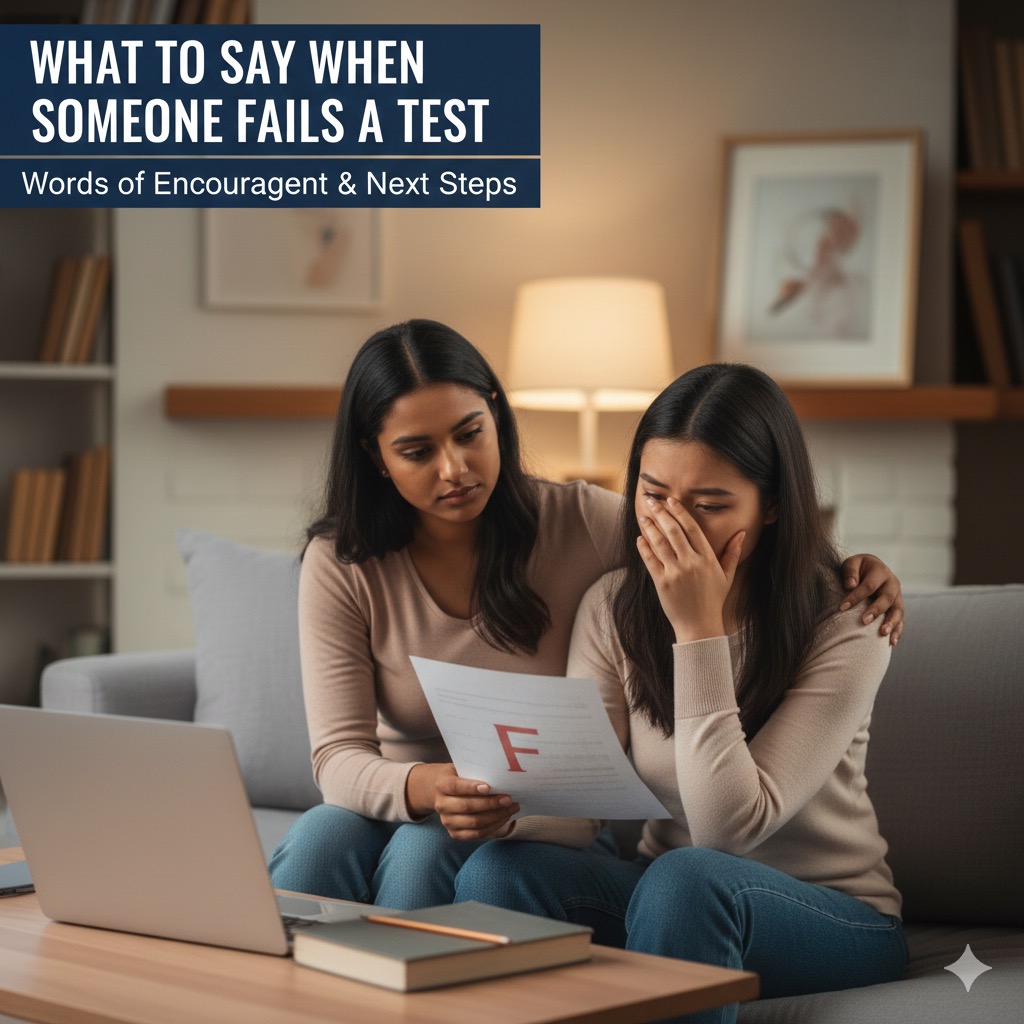
You may struggle with what to say when someone fails a test because the moment feels both private and awkward. You want to acknowledge their disappointment without making it worse, but it can be hard to find words that feel sincere and helpful.
Simple wording helps because it reduces pressure on both you and the person who failed. Clear, brief phrases can convey care, open the door for conversation, and avoid accidental minimization of their feelings.
This article gives a set of practical phrases you can use, explains why the moment matters, lists what not to say, and offers tips for handling the situation with the right tone and boundaries.
Why This Moment Matters
Failing a test can trigger a mix of emotions: embarrassment, frustration, self-doubt, and worry about consequences. Socially, the person may fear judgment from peers or feel exposed if you respond in a way that sounds dismissive or overly cheerful.
How you respond influences whether they feel supported or isolated. A calm, straightforward reaction can validate their feelings, keep them from withdrawing, and make it easier for them to consider next steps like asking for help or changing study strategies.
Useful Things to Say
Simple Responses
I’m sorry to hear that.
A brief acknowledgement that recognizes the setback without offering immediate solutions.
That must be really frustrating.
Names the emotion clearly and shows you understand this is upsetting.
Thanks for telling me.
Affirms their trust in sharing the news and keeps the interaction respectful.
Do you want to talk about it now?
Gives control to the person and respects their readiness to discuss the situation.
I’m here if you need anything.
Offers open-ended support without pressure to accept help immediately.
That sounds tough.
Short and direct validation that avoids minimizing their reaction.
Supportive Responses
What would help you most right now—someone to listen or help figure out a next step?
Balances emotional support with practical assistance by asking what they need.
Would it help to look over the material together or find resources?
Offers concrete help that can turn disappointment into constructive action.
If you want, we can set up small goals for studying next time.
Suggests a manageable plan without implying the failure was a personal flaw.
Let’s break this down and see what went wrong, step by step.
Frames the situation as a problem to solve, which can reduce overwhelm.
Do you want me to help you contact the teacher or tutor?
Proposes specific, tangible support for dealing with consequences or getting clarification.
It might be useful to try a different study technique—do you want suggestions?
Gently introduces options for improvement without assigning blame.
Empathetic Responses
I can imagine how disappointed you must feel after preparing so much.
Validates effort and acknowledges the emotional cost of the setback.
It’s okay to feel upset about this—your reaction makes sense.
Normalizes their feelings and reduces shame about being emotional.
You worked hard, and one test doesn’t erase that.
Separates the person’s worth and effort from a single outcome, without minimizing the result.
If you want to vent, I’m here to listen without judgment.
Creates a safe space for honest feelings without trying to fix everything immediately.
You’re not alone in this—many people have been where you are and recovered.
Offers perspective while keeping the focus on empathy rather than platitudes.
Tell me what part felt most unfair to you.
Invites them to express specifics so you can respond with targeted empathy.
Light, Warm Responses
I’m really proud of you for putting in the effort.
Acknowledges courage and persistence in a gentle way that can lift morale.
We’ll figure this out together—one step at a time.
Combines reassurance with a partnership approach that feels comforting.
Want to take a short break and do something relaxing?
Offers a small, caring diversion to help them regain composure before deciding next steps.
Let’s grab a coffee and talk when you’re ready.
A warm invitation to connect physically and emotionally without forcing a heavy conversation.
What Not to Say
- ‘It’s not a big deal’ — This minimizes their feelings and can make them feel unheard.
- ‘You should have studied harder’ — Blame is unhelpful and increases shame.
- ‘At least it’s not [something worse]’ — Comparative reassurance invalidates their specific disappointment.
- ‘You’ll get over it’ — Dismisses their current emotional state instead of acknowledging it.
- ‘Maybe you’re not cut out for this’ — Questions competence in a way that harms confidence.
- ‘Well, everyone fails sometimes’ — While true, it can sound like a brush-off when they need validation.
Helpful Tips for Handling the Moment
- Use a calm, steady tone; avoid sounding overly bright or dismissive.
- Offer timing choices: ask if they want to talk now or later, and respect their answer.
- Listen more than you speak; give them space to explain without interrupting.
- Keep open body language—facing them, maintaining gentle eye contact if appropriate.
- Ask what kind of support they want rather than assuming you know.
- Respect boundaries: if they decline help, check in later instead of pushing.
- Keep practical follow-up options simple and specific, like scheduling a study session or contacting an instructor.
Final Thought
You don’t need perfect words—what matters is that you show up with clarity, calm, and willingness to listen or help. A brief, sincere response paired with practical support will often be the most comforting gift you can offer.
Let us know in the comments if this has helped or if you’ve got suggestions we can include
About the Author
Helen Bach is a relationship expert and writer who helps people find the right words when it matters most. She studied English and English Literature at the University of Michigan, where she developed a passion for how language shapes love, conflict, and connection.
At whattosaywhen.net, Helen writes clear, down-to-earth advice on what to say in real-life situations—from first dates and tough conversations to breakups and makeups. Her goal is simple: to make talking about feelings less awkward and a lot more honest.
 What to Say When
Leave a comment