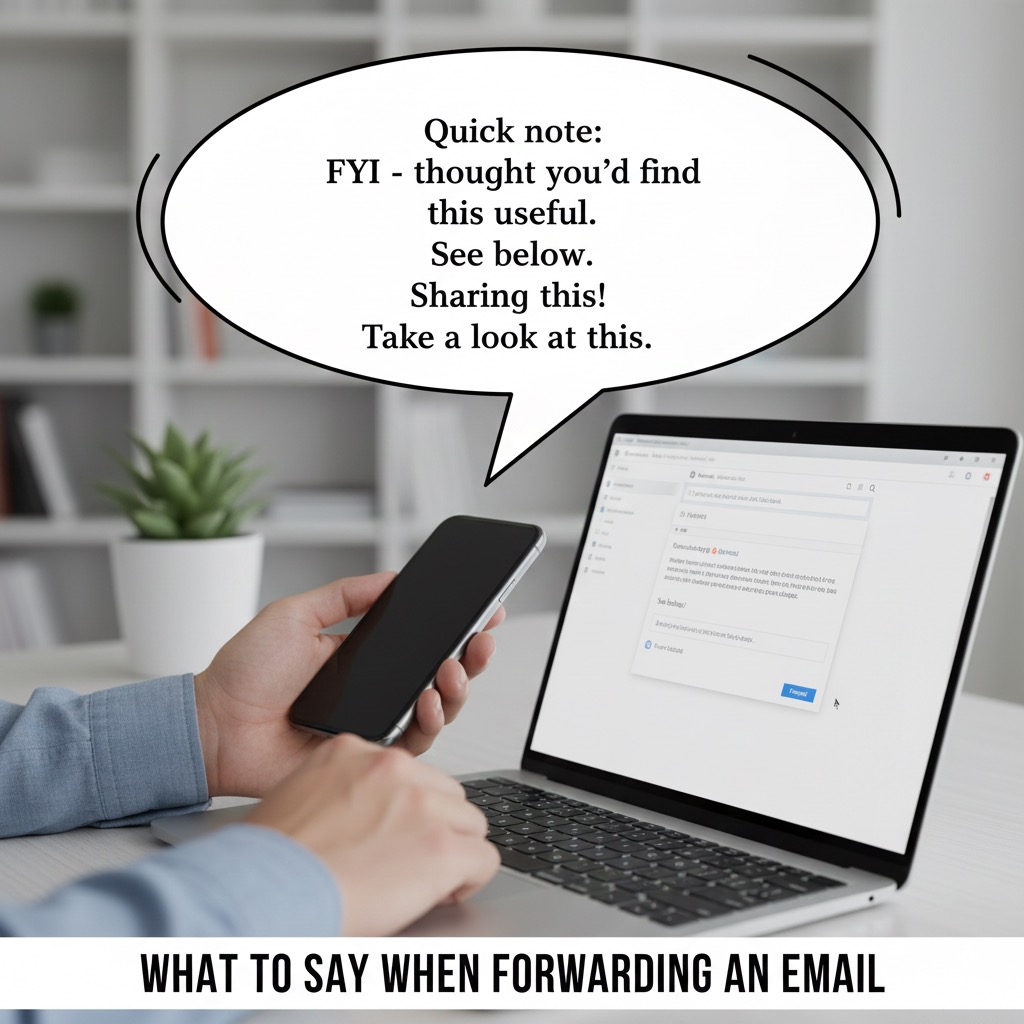
Forwarding an email can feel surprisingly tricky. You may worry about how your note will be interpreted, whether you’re sharing too much, or if forwarding could create awkwardness between people involved.
Simple wording helps because it reduces room for misinterpretation and shows respect for the original sender and the recipient. A brief, clear line explaining why you’re forwarding makes the intention obvious and keeps the focus on useful information rather than emotion.
This article gives short, ready-to-use phrases for different situations, points out what to avoid, and offers practical tips so you can forward messages with confidence.
Why This Moment Matters
Forwarding an email often sits between practical necessity and social sensitivity. On one hand, you might be passing along useful information that someone needs; on the other, you can accidentally expose private comments, imply endorsement, or escalate an issue.
People read forwarded messages not only for content but for cues about your viewpoint and relationship with the original sender. A brief explanatory line helps set expectations: whether you’re asking for advice, passing along an FYI, or sharing something that requires discretion.
Being intentional about how you forward an email preserves trust, clarifies next steps, and reduces the chance of misunderstandings.
Useful Things to Say
Simple Responses
- FYI — forwarding for your information.
A direct statement that you’re not asking for action, just sharing content. - For your reference — please see below.
Keeps the focus on the material and signals that no response may be required. - Sharing this as background.
Useful when the content provides context for a discussion or decision. - Forwarding so you’re in the loop.
Indicates you want the recipient to be aware without implying urgency.
Supportive Responses
- I can follow up with them if you’d like.
Offers to take the next step and relieves the recipient of immediate responsibility. - If this looks relevant, I’m happy to coordinate next steps.
Shows willingness to help and clarifies that action is available but not assumed. - Let me know how you want me to handle this.
Puts the decision back to the recipient and prevents overstepping. - I’m forwarding this to help with [specific task].
Explains purpose so the recipient knows how to use the information.
Empathetic Responses
- I thought you’d want to see this — I’m here if you want to talk.
Signals emotional awareness and an open offer of support beyond the email. - I’m sorry you’re dealing with this; sharing so it’s on your radar.
A brief expression of sympathy paired with practical sharing. - This might be frustrating — forwarding in case it helps.
Validates the recipient’s likely feelings while providing useful information. - I wanted to share this privately — I’ll respect whatever you decide.
Emphasizes discretion and the recipient’s control over next actions.
Light, Warm Responses
- Thought you’d enjoy this — sending it your way.
A gentle, friendly note suitable for non-sensitive, upbeat content. - Saw this and thought of you — hope it’s helpful.
Adds a personal, warm touch without being intrusive. - Sharing this little win — figured you’d appreciate it.
Appropriate for positive updates or achievements you want to celebrate together. - Just a quick share — hope this brightens your inbox.
Casual and kind for light-hearted content that doesn’t require any response.
What Not to Say
- Don’t forward without adding context, as recipients may misinterpret why you sent it.
- Avoid making judgmental comments about the original sender, which can breach trust.
- Don’t forward confidential information or attachments without permission.
- Avoid passive-aggressive notes or sarcasm, which rarely read as intended in email.
- Don’t assume the recipient wants the message; confirm when appropriate.
- Avoid forwarding to a large group if the content was meant for one person.
Helpful Tips for Handling the Moment
- Keep your tone neutral and concise; one or two lines of context are usually enough.
- Pause before forwarding—check whether the content is appropriate to share and if attachments or headers need redaction.
- Use a clear subject line and, if needed, change “FW:” into a brief subject that explains purpose.
- Add a short note at the top of the forwarded message to explain why you’re sending it.
- Double-check recipients and consider BCC if sharing broadly to protect privacy.
- If the content is sensitive, ask the original sender for permission before forwarding.
- If you’ll follow up in person or by call, mention that to set expectations.
- Respect boundaries: don’t forward messages that delegate someone else’s task without their consent.
Final Thought
When you keep your wording simple, clear, and respectful, you reduce confusion and preserve relationships. A brief line that explains your intention usually matters more than finding the perfect phrase, so trust your judgement and be straightforward.
Let us know in the comments if this has helped or if you’ve got suggestions we can include
About the Author
Helen Bach is a relationship expert and writer who helps people find the right words when it matters most. She studied English and English Literature at the University of Michigan, where she developed a passion for how language shapes love, conflict, and connection.
At whattosaywhen.net, Helen writes clear, down-to-earth advice on what to say in real-life situations—from first dates and tough conversations to breakups and makeups. Her goal is simple: to make talking about feelings less awkward and a lot more honest.
 What to Say When
Leave a comment