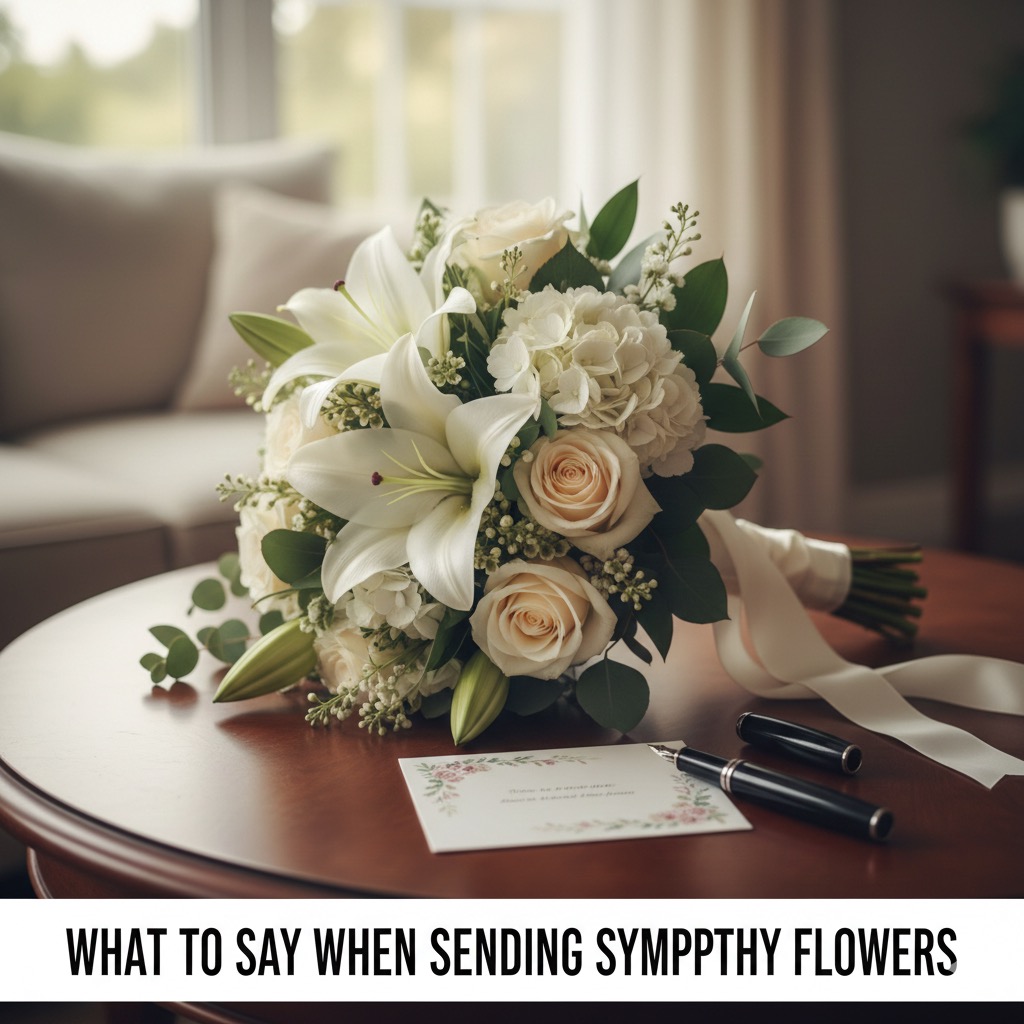
Sending sympathy flowers can feel more complicated than it needs to be. You want your words to be comforting, not intrusive, but you may worry about saying the wrong thing at a vulnerable time.
Simple wording helps because it reduces the chance of misunderstanding and lets the person receiving the flowers focus on the sentiment rather than the language. This article gives short, practical phrases you can include on a card, with notes on tone and options for faith-based or slightly warmer messages.
Use these examples as templates you can adapt to the relationship and the situation.
Why This Moment Matters
When someone is grieving, ordinary social rules change. Your message becomes a small anchor: a sign that someone noticed, cares, and is present without demanding anything in return.
Grief can make people hypersensitive to tone and implication. A clear, modest note attached to flowers helps the bereaved feel seen without feeling overwhelmed.
How you word a sympathy card can shape how your support is received — whether as an intrusion, a comfort, or simply a polite gesture. Aim for clarity and genuine regard.
Useful Things to Say
Simple Responses
- I’m very sorry you’re going through this.
A brief, direct expression of sorrow that acknowledges the situation without assumptions. - Please accept my condolences.
Short and respectful, suitable for acquaintances, coworkers, or formal relationships. - My thoughts are with you today.
A concise acknowledgement that you are thinking of the person without offering platitudes. - With sympathy.
Clean and straightforward when space is limited on a card.
Supportive Responses
- If it would help, I can bring dinner or pick up errands this week.
Offers a specific form of help, which is easier for someone to accept than a general offer. - I’m here for whatever you need — even if it’s just to sit together quietly.
Communicates availability while respecting that grieving people may not want to talk. - I can watch the kids or help with the house this weekend, if that’s useful.
Concrete, actionable offers make it easier for the bereaved to say yes. - Please tell me what would be most helpful right now.
Gives control back to the person grieving and avoids assumptions about their needs.
Empathetic Responses
- I can’t imagine how hard this is, but I’m here if you want to talk.
Validates that you don’t presume to know their experience while offering presence. - My heart goes out to you during this difficult time.
Conveys sincere compassion without overstepping emotional boundaries. - This loss matters to me. I’m thinking of you and remembering [Name] with you.
Personalizes the message and acknowledges the significance of the loss. - It’s okay to grieve in your own way and on your own timeline.
Supports the person’s process and removes pressure to “recover” quickly.
Light, Warm Responses
- Sending you a quiet hug along with these flowers.
Gentle warmth that’s appropriate for friends or close neighbors. - Wishing you moments of peace and small comforts in the days ahead.
Softly hopeful without overstating or minimizing the pain. - These blooms are a small reminder that someone cares about you right now.
Combines the physical gesture with a clear, warm intention.
Faith-Based Responses
- You’re in my prayers during this time of loss.
Straightforward and respectful for people who appreciate spiritual language. - May God give you strength and comfort in the days ahead.
Offers spiritual consolation while recognizing the need for practical support. - We are praying for peace for you and for [Name].
Inclusive and communal, suitable when faith is a shared resource. - Holding you in prayer and asking for comfort for your family.
Communicates ongoing spiritual support rather than a single, perfunctory statement.
What Not to Say
- Don’t say “I know how you feel,” because it can minimize the uniqueness of their grief.
- Avoid “They’re in a better place,” which can dismiss immediate pain or conflict with the person’s beliefs.
- Don’t use “At least…” phrases that compare losses or try to find a silver lining.
- Avoid vague offers like “Call me if you need anything,” which place the burden on the bereaved to reach out.
- Don’t make judgments about how they should grieve or how long it should take.
Helpful Tips for Handling the Moment
- Keep your tone calm and respectful; simpler language is often more comforting than elaborate expressions.
- Time matters: send flowers and a note promptly, but a thoughtful message later is still valuable.
- Listen more than you speak if you have a chance to follow up in person or by phone.
- Match your message to your relationship—close friends can be warmer; colleagues should be more reserved.
- Use clear body language (a soft tone, gentle eye contact) if you deliver the flowers in person.
- Respect boundaries: if someone asks for space, let them know you’re available when they’re ready.
- Prefer specific offers of help over general ones, and follow through on anything you promise.
Final Thought
When you send sympathy flowers, sincerity matters more than perfect wording. A short, genuine note paired with a concrete offer of help will be received as thoughtful and caring. Trust that simple, honest words can provide real comfort at a difficult time.
Let us know in the comments if this has helped or if you’ve got suggestions we can include
About the Author
Helen Bach is a relationship expert and writer who helps people find the right words when it matters most. She studied English and English Literature at the University of Michigan, where she developed a passion for how language shapes love, conflict, and connection.
At whattosaywhen.net, Helen writes clear, down-to-earth advice on what to say in real-life situations—from first dates and tough conversations to breakups and makeups. Her goal is simple: to make talking about feelings less awkward and a lot more honest.
 What to Say When
Leave a comment