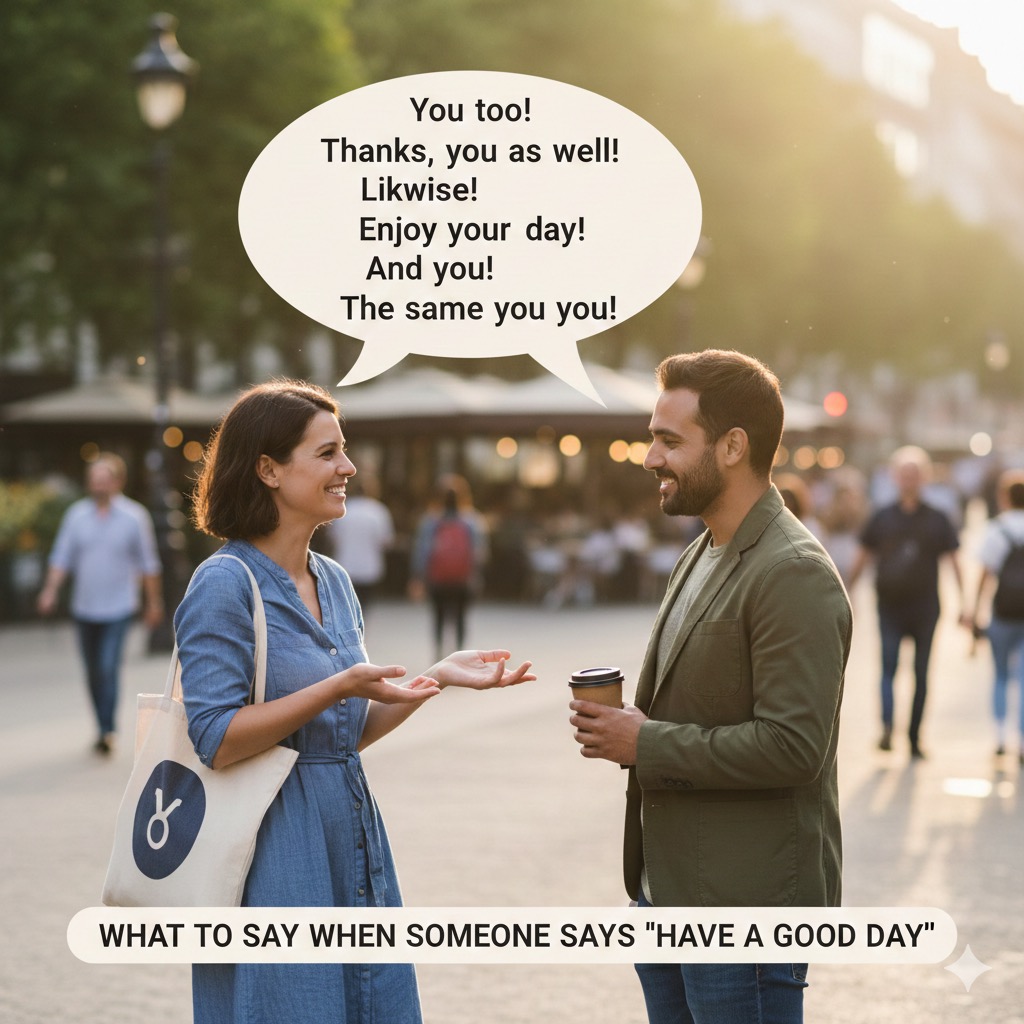
You might find yourself unsure what to say when someone says ‘Have a good day’ because it feels like a small social cue that demands a quick, appropriate response. People worry about sounding curt, insincere, or getting stuck in awkward small talk, especially when they’re distracted or not feeling upbeat.
Simple wording helps because it reduces pressure and lets you respond reliably without overthinking. This article gives short, usable replies you can use in different moods and situations, plus guidance on what to avoid and how to handle the moment gracefully.
Why This Moment Matters
A brief exchange like ‘Have a good day’ is part of everyday social etiquette and helps maintain a sense of mutual respect. Even if the interaction lasts a second, your response signals acknowledgment and can set the tone for the rest of an encounter.
How you reply also reflects emotional awareness: a neutral or kind answer can defuse awkwardness, while a rushed or dismissive reaction can unintentionally feel cold. Practicing simple, appropriate responses makes these moments easier and more authentic.
Useful Things to Say
Simple Responses
These are short, clear acknowledgements that work in most settings.
- Thanks, you too. A quick, polite reply that returns the sentiment without adding extra conversation.
- You as well. Brief and slightly more formal; useful in workplace or service settings.
- Appreciate it—have a good one. Slightly warmer while still concise, suitable for casual encounters.
- Thanks, enjoy your day. Polite and friendly without being effusive.
- Same to you. Neutral and direct; good when you want to keep things short.
- Cheers. Informal and pleasant; works well in relaxed social situations.
Supportive Responses
Use these when you want to add a helpful or practical tone.
- Thanks—hope it goes well for you. Conveys that you care about their day in a practical way.
- Appreciate that—take care today. Suggests concern for their wellbeing without being intrusive.
- Thanks, let me know if you need anything. Offers help if the context allows for follow-up support.
- Thanks—good luck with your meeting/appointment. Personalizes the reply if you know something specific about their day.
- Thanks, I hope your day is productive. Useful in professional settings where productivity is a shared focus.
- Thanks—stay safe out there. Appropriate when safety or travel is a concern.
Empathetic Responses
Choose these when you sense the person might appreciate emotional awareness.
- Thanks—same to you, I hope it’s a gentle day. Validates that not everyone expects a perfect day and expresses care.
- Thanks, I’m sending good vibes your way. Warm and supportive while keeping it brief.
- Thanks—wishing you a calm one. A low-key, compassionate reply that suits someone who may be stressed.
- Thank you—I hope things go smoothly for you. Acknowledges potential difficulties and expresses hope.
- Thanks, I appreciate that—take it easy. Combines gratitude with a gentle suggestion to pace themselves.
- Thanks, I’m thinking of you—hope it’s kind. Slightly more intimate; use with acquaintances you know reasonably well.
Light, Warm Responses
These add a touch of friendliness and are suitable for casual or positive interactions.
- Thanks—make something nice today. Playful and encouraging without being overly familiar.
- Thanks, enjoy whatever comes your way. Cheerful and flexible for different kinds of days.
- Thank you—hope you find a bright spot today. Gentle and optimistic while remaining grounded.
- Thanks—smile at something for me. Lighthearted and warm, best with people you know slightly.
- Thanks—have a lovely day. Warmer than neutral replies, useful in pleasant social settings.
- Thanks—may it be a good one. Slightly poetic but still simple and friendly.
What Not to Say
- Avoid responding with silence or a blank look, which can be interpreted as rudeness or disinterest.
- Don’t use sarcasm (e.g., “Yeah, sure”) since it can read as dismissive or hostile.
- Avoid oversharing personal problems in this brief exchange, as it can make the other person uncomfortable.
- Don’t respond with a competing complaint (e.g., “Not likely”) which shuts down positive rapport.
- Avoid correcting the person or turning it into an argument about what “good” means.
- Don’t ignore the sentiment entirely by changing the subject abruptly.
Helpful Tips for Handling the Moment
- Keep your tone warm but natural; matching the other person’s energy helps the exchange feel genuine.
- Time your response to be immediate but not rushed—pausing slightly to make eye contact reinforces sincerity.
- Listen to context cues: a cashier’s “Have a good day” is different from a coworker’s personal send-off.
- Use body language—nod, smile softly, or a small hand gesture—to support your words.
- Respect boundaries: if you’re not up for chatting, a brief polite reply is perfectly acceptable.
- If you want to be helpful, add one specific supportive offer rather than a general “let me know.”
- Practice a few go-to replies so you’re not scrambling for words when the moment comes.
Final Thought
You don’t need a perfect or elaborate line—most people simply want acknowledgment. Choosing a brief, sincere response that fits the situation will usually be enough and will make these everyday moments feel smoother and more comfortable.
Let us know in the comments if this has helped or if you’ve got suggestions we can include
About the Author
Helen Bach is a relationship expert and writer who helps people find the right words when it matters most. She studied English and English Literature at the University of Michigan, where she developed a passion for how language shapes love, conflict, and connection.
At whattosaywhen.net, Helen writes clear, down-to-earth advice on what to say in real-life situations—from first dates and tough conversations to breakups and makeups. Her goal is simple: to make talking about feelings less awkward and a lot more honest.
 What to Say When
Leave a comment