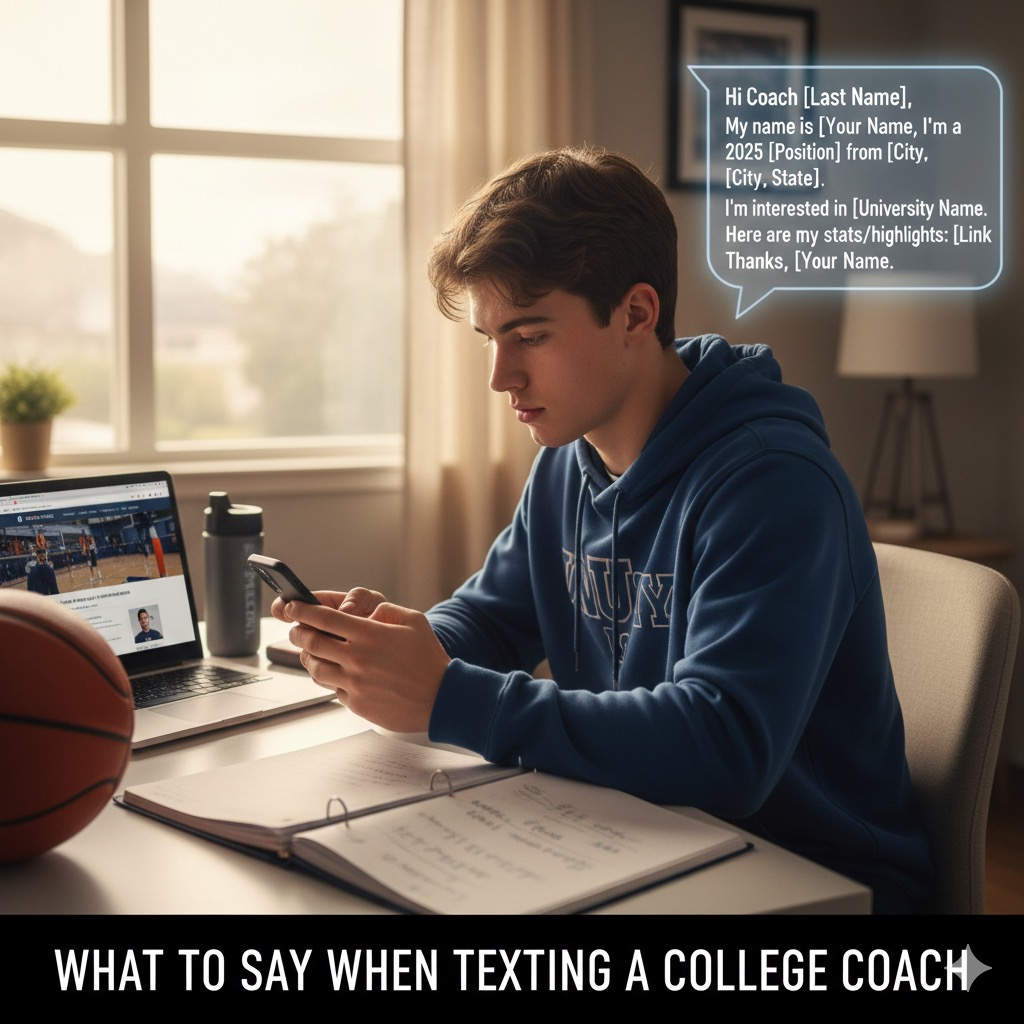
Texting a college coach can feel awkward because the relationship mixes formality with personal connection. You may worry about sounding unprepared, too casual, or overly eager, and that uncertainty makes it hard to choose the right words.
Simple, direct phrasing helps because it reduces the chance of misinterpretation and lets the coach focus on your availability, interest, and fit. Clear messages also show respect for the coach’s time.
This article gives ready-to-use text phrases for different moments — quick confirmations, logistical details, empathetic replies, and warm enthusiasm — plus tips on what to avoid and how to handle the conversation professionally.
Why This Moment Matters
A text to a coach often represents a first impression or a critical follow-up after an event, visit, or game. Coaches are evaluating communication skills, seriousness about the program, and how you respond under small pressures.
Your wording can shape the next steps: scheduling a call, securing a visit, or keeping your candidacy active. Getting the tone right helps you appear reliable, respectful, and coachable without overcomplicating the exchange.
Useful Things to Say
Simple Responses
- Thanks, Coach — I received that.
A concise confirmation that ensures the coach knows you saw the message. - Got it. I’ll be there at 10 a.m.
Directly confirms time and attendance so there’s no ambiguity. - Understood. I’ll send my highlights tonight.
Confirms action and timing, which helps the coach plan. - Noted — thanks for the update.
A neutral, polite way to acknowledge information without adding extra details. - Okay, I’ll wait for your follow-up.
Shows patience and that you’re ready to act when the coach provides more information.
Supportive Responses
- I can provide references or additional film if helpful.
Offers concrete next steps and signals readiness to support the evaluation process. - If the visit date changes, I have flexibility on weekends.
Gives useful scheduling information while keeping the message brief. - I’ll confirm with my school and let you know within 48 hours.
Sets a clear timeline so the coach knows when to expect your reply. - I’m available for a call this week — what day works best for you?
Moves the conversation toward a more detailed discussion while being accommodating. - I’ve attached my transcript and updated roster info. Let me know if anything else is needed.
Clarifies what you’ve already done and invites further requests.
Empathetic Responses
- I appreciate you letting me know — sorry that timing didn’t work out.
Acknowledges the coach’s message and expresses understanding without drama. - I understand the roster is tight; thanks for considering me.
Validates the coach’s constraints while preserving a positive tone. - I’m disappointed but grateful for the chance to be evaluated.
Conveys honest emotion without sounding accusatory or bitter. - Thanks for the update — I’d value any feedback you can share.
Keeps the door open for constructive comments and shows you want to improve. - I respect your decision and would like to stay in touch.
Maintains the relationship and signals professionalism despite a setback.
Light, Warm Responses
- Excited to meet the team — thank you for arranging the visit!
Expresses enthusiasm in a friendly, appropriate way. - Really appreciate the opportunity — looking forward to learning more.
Balances gratitude with eagerness to engage further. - Great news — I’ll mark the date and send any materials you requested.
Reflects positive energy and confirms action steps. - Thanks so much for the quick response — that helps a lot.
A warm but succinct way to acknowledge helpfulness. - I’m glad to hear this — please let me know if there’s anything I should prepare.
Shows proactive engagement without overstepping.
What Not to Say
- Don’t send overly familiar language or nicknames, which can seem unprofessional.
- Avoid pressuring the coach with statements like “You must watch my film now.”
- Don’t respond emotionally or angrily to bad news; it closes doors.
- Avoid long paragraphs that demand time to read; concise texts get read first.
- Don’t overshare personal information unrelated to the recruiting process.
- Avoid making assumptions about roster decisions or coaching plans.
Helpful Tips for Handling the Moment
- Keep the tone respectful and concise; treat texts like brief professional emails.
- Time your messages during normal hours; texting late at night can be inappropriate.
- Read the coach’s tone and mirror formality — if they use full sentences, do the same.
- Use short paragraphs or single lines so your message is scannable.
- Confirm specifics (date, time, location) to avoid misunderstandings.
- Offer clear next steps or availability instead of open-ended replies.
- Listen when the coach requests a call or additional information, and respond promptly.
- Respect boundaries: if the coach prefers email for official documents, follow that preference.
Final Thought
You don’t need perfect wording to make a good impression — clarity, respect, and a willingness to follow through matter most. Keep your texts simple, professional, and prompt, and you’ll make the communication easier for both you and the coach.
Let us know in the comments if this has helped or if you’ve got suggestions we can include
About the Author
Helen Bach is a relationship expert and writer who helps people find the right words when it matters most. She studied English and English Literature at the University of Michigan, where she developed a passion for how language shapes love, conflict, and connection.
At whattosaywhen.net, Helen writes clear, down-to-earth advice on what to say in real-life situations—from first dates and tough conversations to breakups and makeups. Her goal is simple: to make talking about feelings less awkward and a lot more honest.
 What to Say When
Leave a comment