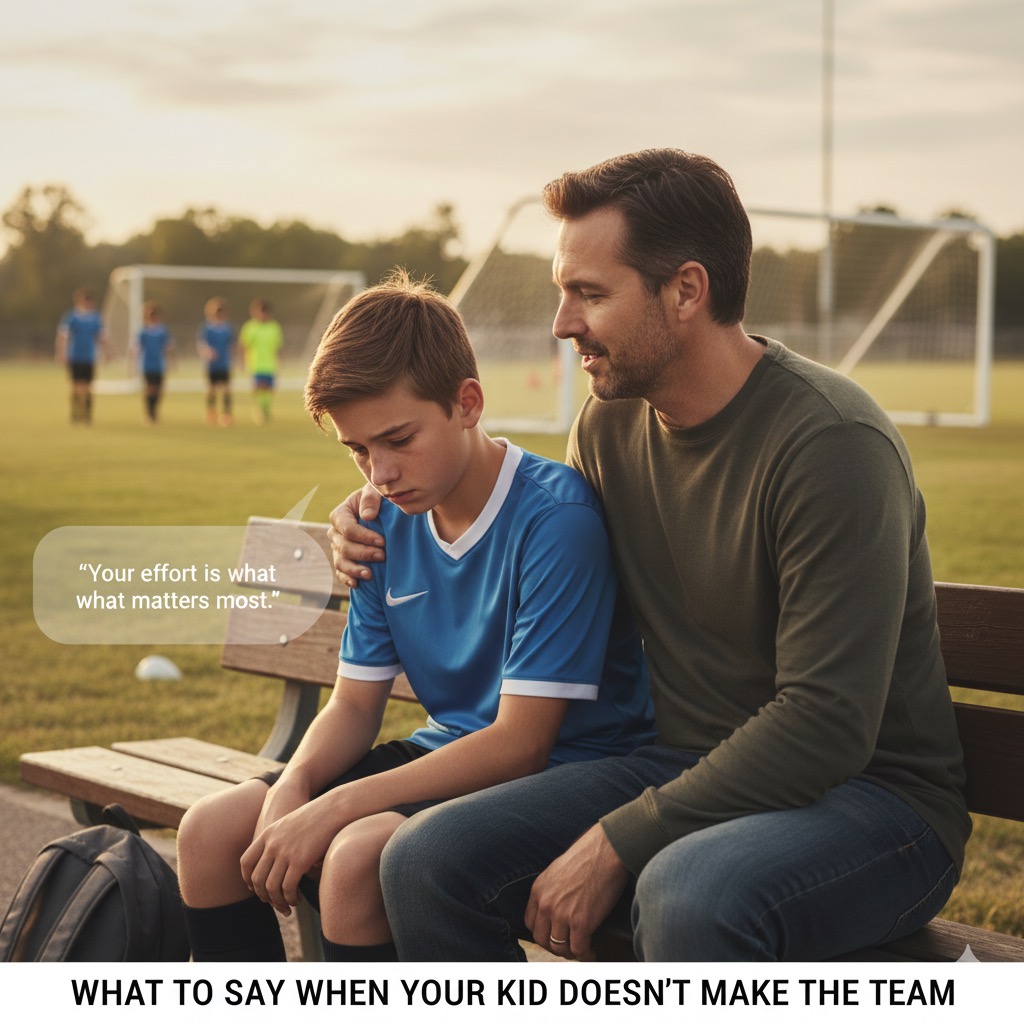
When your child doesn’t make the team, you may instantly feel a mix of disappointment, worry about their self-esteem, and uncertainty about how to respond. Many parents hesitate because they want to protect their child’s feelings but also want to encourage resilience, and those goals can feel at odds in the moment.
Simple wording helps because it reduces the chance of saying something that minimizes the child’s feelings or unintentionally adds pressure. Clear, compassionate phrases make it easier for your child to process the news and for you to model steady support.
This article gives short, usable lines you can say right after the news, plus guidance on what to avoid and practical tips for handling the moment with care.
Why This Moment Matters
Not making a team is often one of a child’s first direct experiences of disappointment and rejection outside the family. It can touch on identity, belonging, and competence, so your response matters more than any single solution.
Your reaction sets a tone for how they learn to cope: a calm, accepting response helps them name their feelings and consider next steps, while a dismissive or overreactive response can make them shut down or feel embarrassed. You don’t need to fix the situation; you need to provide presence and tools for moving forward.
How you speak also influences whether they feel safe discussing future goals, practice, or trying again. Thoughtful, simple language preserves their dignity and leaves room for problem-solving when they’re ready.
Useful Things to Say
Simple Responses
I’m here. Short and direct, this signals immediate availability without pushing the child to perform emotionally.
That’s really disappointing. Naming the feeling shows you recognize the reality of the setback without minimizing it.
Tell me what happened when you’re ready. This invites them to share details on their terms and gives you information without pressing.
You don’t have to pretend it’s okay. Permission to feel honest prevents them from bottling emotions.
We’ll figure out the next step together. A concise practical assurance that you won’t leave them to handle it alone.
Supportive Responses
What would help you right now — space or company? Gives the child agency over how they want to be supported.
If you want, we can look at what to practice together. Offers practical next steps while leaving the choice to them.
Do you want to talk to the coach about this? I can help you plan what to say. Helps them consider constructive action and prepares them to communicate assertively.
It’s okay to try out for other things, too — different teams or different activities. Expands options without pushing for immediate replacement.
If you want some time to think, we can check in later. Sets a follow-up so they know the conversation isn’t closed.
Empathetic Responses
I can hear how disappointed you are. Reflecting their emotion helps them feel understood and less isolated.
You worked hard, and this result doesn’t erase that effort. Validates effort rather than reducing worth to the outcome.
It’s normal to feel upset or angry — those are okay feelings. Normalizing emotions reduces shame about feeling bad.
I’m proud of you for going for it. That takes courage. Acknowledges bravery and separates character from outcome.
If you want to cry or be quiet, that’s fine — I’ll stay with you. Offers presence alongside permission for a range of emotions.
Light, Warm Responses
Let’s do something small you enjoy for a little while. A gentle redirect that provides comfort without dismissing the disappointment.
I love that you tried; I love you no matter what. Reinforces unconditional support while keeping the focus off performance.
We can still celebrate the effort you put in. Want a treat or a walk? Combines acknowledgement with a low-pressure, caring activity.
You’re allowed to feel sad today — we can look forward to something fun tomorrow. Balances present validation with mild reassurance about the near future.
What Not to Say
- “It’s no big deal.” This minimizes the child’s feelings and can make them feel dismissed.
- “You’ll get over it.” Avoid implying their emotions should be short-lived on your timetable.
- “Maybe sports aren’t for you.” That shuts down possibilities and may feel like judgment.
- “If you’d practiced more…” Blaming the child can damage confidence and increase shame.
- “Other kids have it worse.” Comparative statements invalidate emotional experience.
- “You’ll make it next year.” Avoid promising outcomes you don’t control; focus on the present.
Helpful Tips for Handling the Moment
- Tone: Keep your voice calm and steady; an even tone communicates safety.
- Timing: Give an immediate, short acknowledgment, and offer to talk more later when emotions aren’t raw.
- Listening: Let the child speak first and reflect what you hear; ask open questions rather than making assumptions.
- Body language: Kneel or sit to be at eye level, maintain gentle eye contact, and mirror openness — avoid crossing arms or rushing away.
- Physical contact: Offer a hug or a hand on the shoulder only if you know the child finds that comforting.
- Boundaries: Don’t try to fix everything at once; offer one or two concrete options instead of a long list.
- Problem-solving: Wait until the child is ready before moving into solutions; ask if they want ideas before giving them.
- Follow-up: Schedule a check-in later in the day or week so they know the conversation continues.
Final Thought
You don’t need perfect words to be helpful — your steady presence and a few clear, compassionate statements will do most of the work. When you listen, validate, and offer choices, you give your child the space to process the setback and to try again when they’re ready.
Let us know in the comments if this has helped or if you’ve got suggestions we can include
About the Author
Helen Bach is a relationship expert and writer who helps people find the right words when it matters most. She studied English and English Literature at the University of Michigan, where she developed a passion for how language shapes love, conflict, and connection.
At whattosaywhen.net, Helen writes clear, down-to-earth advice on what to say in real-life situations—from first dates and tough conversations to breakups and makeups. Her goal is simple: to make talking about feelings less awkward and a lot more honest.
 What to Say When
Leave a comment