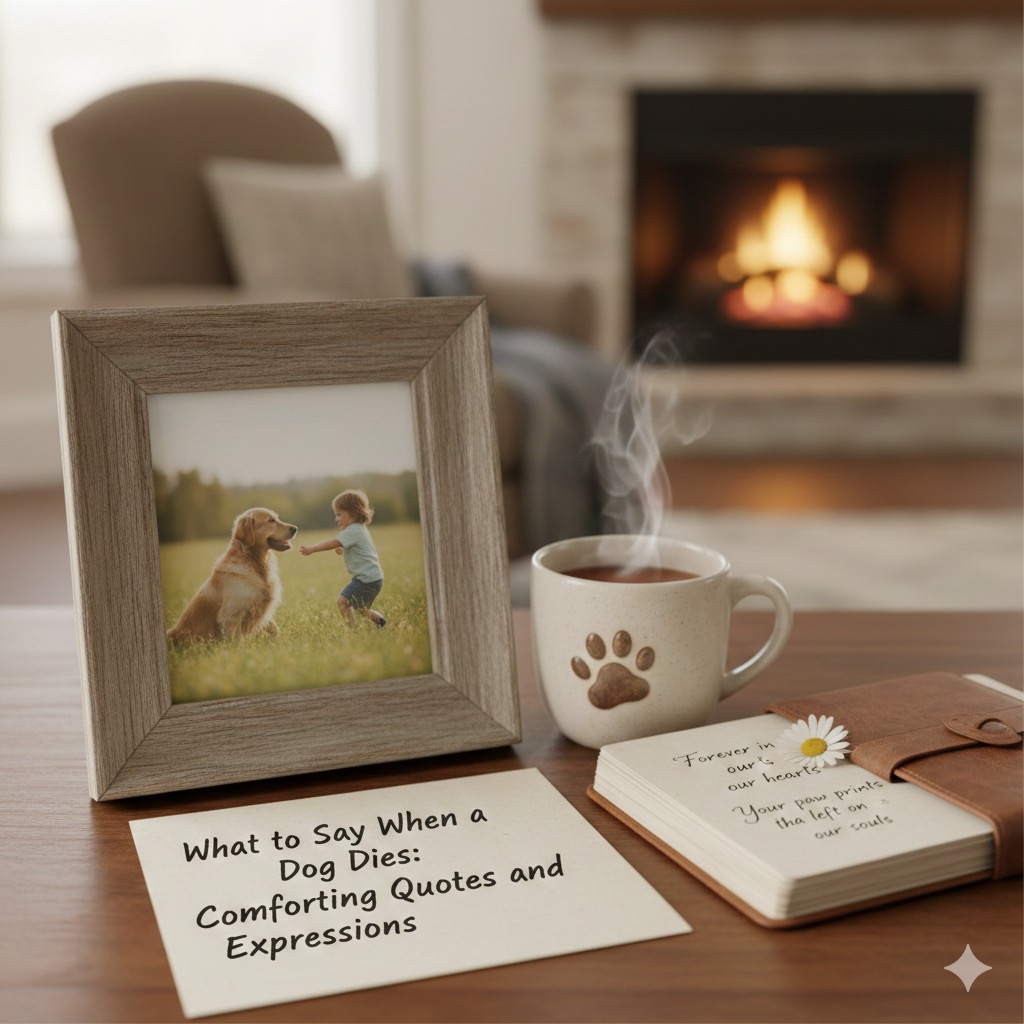
When a dog dies, you may find yourself unsure what to say. People struggle because grief is personal and you don’t want to say something that feels dismissive, overly familiar, or awkward.
Simple, sincere wording helps because it communicates care without trying to fix a pain you can’t solve. Short phrases give the bereaved space to respond or to be silent, which is often what they need most.
This article gives clear examples you can use right away, grouped by tone and purpose, plus a few practical pointers about what to avoid and how to offer support in a respectful way.
Why This Moment Matters
A pet’s death can feel like the loss of a family member. Dogs often share routines, companionship and emotional support, so the grief can be deep and sudden. People grieving a dog may also feel judged because pet loss is sometimes minimized by others.
How you respond shapes the bereaved person’s experience in that moment. A careful, uncomplicated phrase can validate their feelings and reduce isolation. Your words don’t need to be perfect; they just need to show that you recognize the loss and care about the person who’s hurting.
Useful Things to Say
Simple Responses
- I’m so sorry. A clear, direct expression of sympathy that acknowledges the loss without trying to explain it.
- I’m sorry for your loss. A slightly more formal option that is appropriate for cards, texts, or in-person conversations.
- That’s really hard. A straightforward recognition that the situation is difficult and not something to downplay.
- I’m thinking of you. A concise way to let someone know they’re in your mind without pressuring them to respond.
Supportive Responses
- Can I bring anything over? A practical offer that opens the door for specific help like food, errands, or company.
- Would you like me to help with arrangements? A concrete offer to assist with burial, cremation, or memorial details removes a practical burden.
- Do you want some company today or would you prefer space? Giving the person a choice respects their emotional needs and control.
- I can take care of [small task] if that helps. Naming a specific task (groceries, walking other pets, calls) makes it easier for them to accept help.
Empathetic Responses
- It’s okay to feel how you’re feeling. Validates their emotions and removes pressure to perform grief in a certain way.
- You gave them a good life. Acknowledges the care and attention they provided, which many people need to hear.
- I remember how much they loved [a routine or habit]. A brief, specific memory shows you noticed the bond without taking the spotlight.
- If you need to talk about them, I’m here to listen. Offers a listening presence rather than advice or platitudes.
Light, Warm Responses
- They were a really special dog. Gentle warmth that honors the pet’s place in the family.
- I’ll always smile when I think of their silly habits. Offers a soft, positive memory that can feel comforting without forcing cheerfulness.
- You gave them so much love. Affirms the relationship in a warm, nonprescriptive way.
- If you want to share photos or stories, I’d love to hear them. Opens a friendly invitation to remember the pet together.
Faith-Based Responses
- I’m praying for you and [dog’s name]. A faith-centered offer that may be meaningful to those who find comfort in prayer.
- May you find peace in your memories. A gentle blessing-style statement that fits many spiritual perspectives.
- I’ll keep you in my thoughts and prayers during this time. Lets someone know you’re holding them in spiritual care without pushing specifics.
- If you’d like, I can say a prayer with you. Offers shared spiritual support while leaving the choice up to them.
What Not to Say
- Don’t say “It was just a dog.” — This minimizes the person’s loss and can feel dismissive.
- Don’t say “At least it lived a long life.” — Comparisons meant to comfort can come across as invalidating.
- Don’t say “You can get another one.” — Suggesting a replacement ignores the uniqueness of the bond.
- Don’t give unsolicited medical or end-of-life advice after the fact. — This shifts focus from empathy to judgment.
- Don’t force a cheerful spin like “It’s for the best.” — Reframing their pain as positive can feel insensitive.
Helpful Tips for Handling the Moment
- Tone: Keep your voice calm and steady; avoid sounding rushed or rehearsed.
- Timing: Reach out soon after you learn of the loss, but be mindful if the person wants privacy.
- Listening: Let them lead the conversation; ask open questions and give space for silence.
- Body language: Offer a gentle touch if appropriate (hand on a shoulder) and maintain eye contact without staring.
- Boundaries: Respect how much they want to share and don’t push for details about the death unless they offer them.
- Follow-up: Check in later — grief can continue, and ongoing support matters.
- Practical help: Offer specific, manageable actions rather than vague offers of support.
Final Thought
You don’t need perfect words to show you care. A short, sincere phrase and a willingness to listen or help will often mean more than an elaborate speech. Your presence and empathy are the most important things you can offer in this moment.
Let us know in the comments if this has helped or if you’ve got suggestions we can include
About the Author
Helen Bach is a relationship expert and writer who helps people find the right words when it matters most. She studied English and English Literature at the University of Michigan, where she developed a passion for how language shapes love, conflict, and connection.
At whattosaywhen.net, Helen writes clear, down-to-earth advice on what to say in real-life situations—from first dates and tough conversations to breakups and makeups. Her goal is simple: to make talking about feelings less awkward and a lot more honest.
 What to Say When
Leave a comment