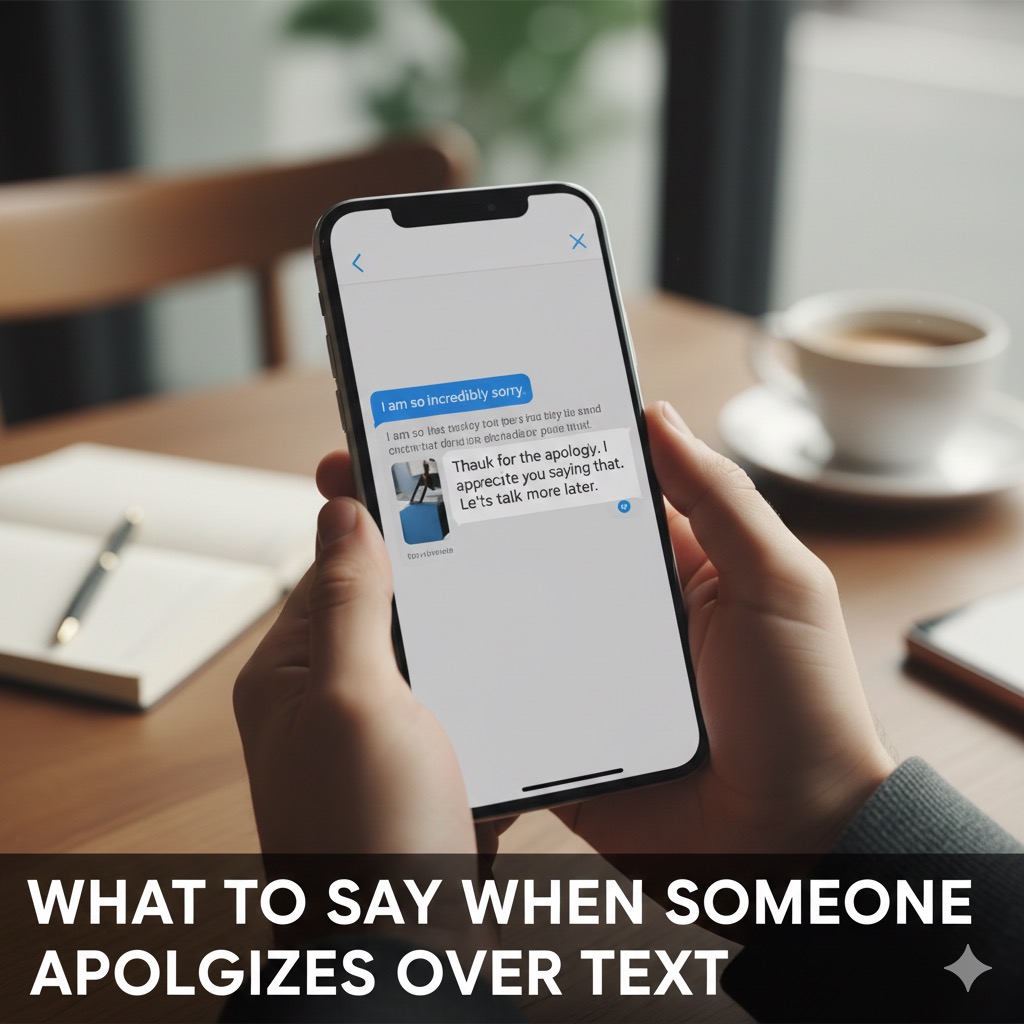
Apologies over text can feel awkward because tone and intent are harder to read without voice or facial cues. You might worry about sounding dismissive, reopening a wound, or committing to more than you’re ready for.
Keeping your wording simple helps you respond clearly without adding confusion or pressure. Short, honest phrases let you acknowledge the apology and set next steps if needed.
This article gives practical example replies you can use or adapt, explains why the moment matters, lists what to avoid, and offers tips on timing, tone, and boundaries.
Why This Moment Matters
An apology is both an emotional signal and a social repair attempt. The person texting is often vulnerable; they may be admitting fault, seeking connection, or trying to reduce tension. How you respond shapes whether the interaction moves toward repair, avoidance, or escalation.
Responding thoughtfully matters for your own emotional safety too. A brief, calm reply can acknowledge the apology while protecting your needs and clarifying whether you want further conversation.
Useful Things to Say
Simple Responses
“Thank you for saying that.”
A concise acknowledgement that recognizes the effort of apologizing without committing to anything more.
“I appreciate your apology.”
Polite and measured; this signals that you’ve received the message while staying neutral about immediate forgiveness.
“I hear you.”
Short and validating, this shows you’ve read and understood the intent without minimizing your own feelings.
“Okay.”
A very brief acknowledgement for cases when you don’t want to engage further; use sparingly because it can come off as cold.
Supportive Responses
“I know it wasn’t easy to say — thank you.”
You recognize their vulnerability while leaving room for continued conversation if you want it.
“I’m willing to talk about this when we’re both calm.”
Sets a boundary around timing and signals openness to resolution without forcing immediate discussion.
“I accept your apology, but I need some time.”
Combines acceptance with a clear personal need, which helps manage expectations.
“Let’s figure out what we both need next.”
Invites collaborative problem-solving if you want to move beyond the apology into practical steps.
Empathetic Responses
“That must have been hard to admit.”
Acknowledges the discomfort of apologizing and creates a softer tone for the exchange.
“I can see you regret this — I appreciate you acknowledging it.”
Validates their feelings while keeping the focus on the apology itself.
“I’m hurt by what happened, but I’m glad you reached out.”
Shares your emotion honestly while appreciating the attempt to repair.
“I understand where you’re coming from, and I also need to share how I felt.”
Balances empathy with your own perspective, setting the stage for mutual understanding.
Light, Warm Responses
“Thank you — that means a lot.”
Gentle and open, this response suits relationships where warmth is appropriate and you want to encourage reconciliation.
“We’re okay; I appreciate you saying that.”
A reassuring reply that signals forgiveness or willingness to move forward without erasing your feelings.
“I forgive you. Let’s move forward.”
Use this only when you genuinely mean it; it can close the chapter in a kind, direct way.
“Good to hear from you — let’s catch up soon.”
Warm and forward-looking if you want to restore normalcy and reestablish connection.
What Not to Say
- Avoid replying with a sarcastic or mocking tone, as it can escalate rather than resolve.
- Don’t bring up unrelated past grievances in the same message, which turns repair into attack.
- Don’t demand an immediate in-depth conversation if you’re not ready, because it pressures both of you.
- Avoid absolutes like “You always” or “You never,” which shift focus away from the apology to blame.
- Don’t ignore the apology entirely; silence can be interpreted as punishment or indifference.
- Avoid minimizing their effort with responses like “It’s nothing” if they clearly meant it.
Helpful Tips for Handling the Moment
- Tone: Keep your tone calm and measured in text; short sentences help prevent misreading.
- Timing: If you’re emotional, wait until you’ve had a moment to think before replying.
- Listening: Ask a clarifying question if you need details, e.g., “Can you tell me what you mean?”
- Body language: If you plan to follow up in person, remember your facial expressions and posture will matter.
- Boundaries: State what you need clearly, such as time, space, or a specific conversation.
- Brevity: Text isn’t ideal for complex emotions; use it to acknowledge and schedule a better time to talk if needed.
- Privacy: Avoid responding publicly to a private apology; keep the exchange between you unless both agree otherwise.
- Follow-through: If you request changes or next steps, be explicit about what you expect and a reasonable timeline.
Final Thought
You don’t need perfect words to respond to an apology. A sincere, clear reply that respects both your needs and the other person’s effort will usually do the work. Trust your instincts, keep it simple, and prioritize what helps you feel respected and safe.
Let us know in the comments if this has helped or if you’ve got suggestions we can include
About the Author
Helen Bach is a relationship expert and writer who helps people find the right words when it matters most. She studied English and English Literature at the University of Michigan, where she developed a passion for how language shapes love, conflict, and connection.
At whattosaywhen.net, Helen writes clear, down-to-earth advice on what to say in real-life situations—from first dates and tough conversations to breakups and makeups. Her goal is simple: to make talking about feelings less awkward and a lot more honest.
 What to Say When
Leave a comment