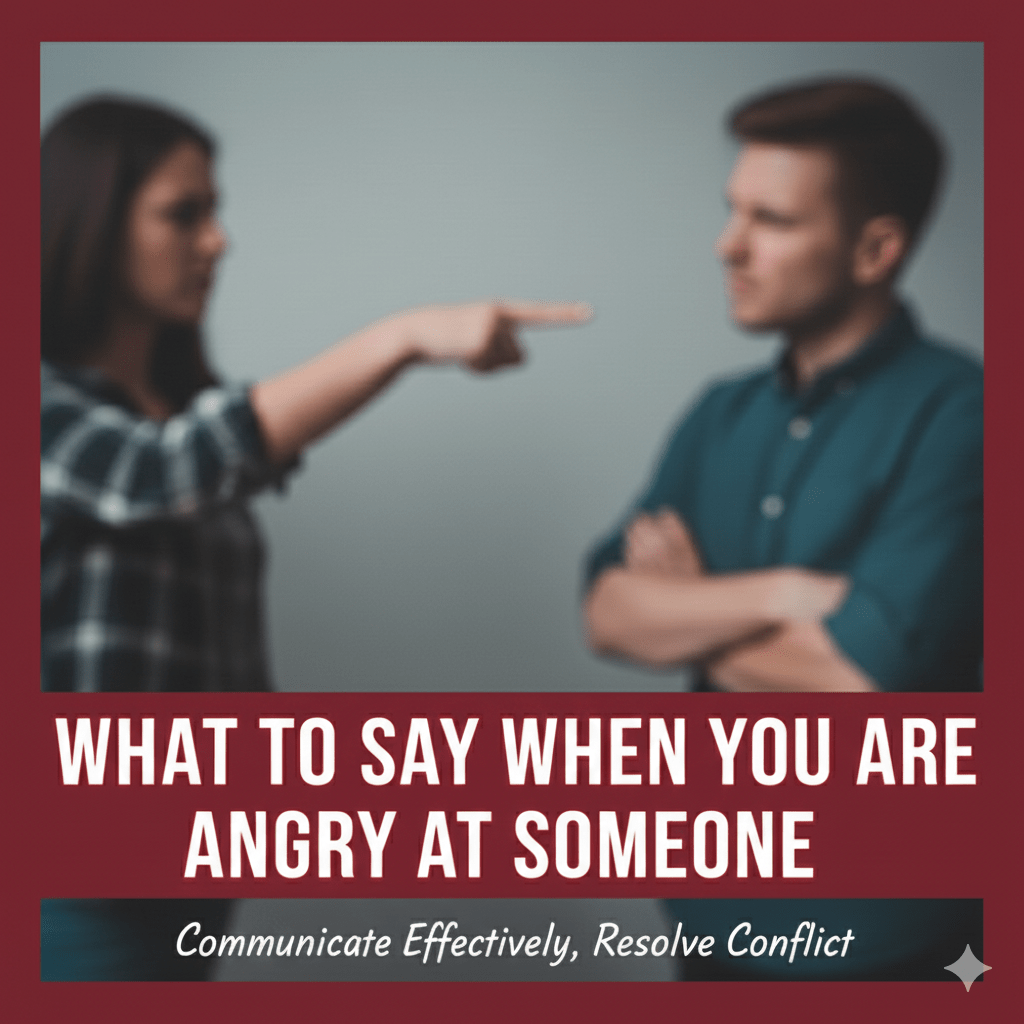
You may hesitate to speak when you’re angry because the moment feels loaded: one wrong line can escalate the situation or make you regret what you said. Anger often shortens patience and blurs the distinction between what you feel and what you want to communicate.
Simple wording helps because it reduces the chance of accidental escalation and keeps the focus on the issue, not a performance. Clear, straightforward phrases let you express boundaries, state needs, or pause the conversation without inflaming it.
This article gives practical, ready-to-use phrases for different goals—acknowledging your state, setting boundaries, offering to repair, and staying emotionally honest—plus guidance on what to avoid and how to handle the moment calmly.
Why This Moment Matters
When you’re angry, your body and brain are primed for quick action, not careful conversation. That makes it easy to say things that feel satisfying in the moment but damage relationships later. Recognizing that dynamic helps you choose wording that protects both your integrity and the other person’s dignity.
Anger also signals an unmet need—respect, safety, fairness, or understanding. How you express that signal affects whether the other person hears the need or retreats into defensiveness. Using simple, specific language increases the chance your point lands and the problem gets addressed.
Finally, this is a social moment: your words will shape the relationship going forward. Even when the issue is small, a calm response preserves trust; when the issue is large, it creates a path to resolution.
Useful Things to Say
Simple Responses
- ‘I’m feeling really angry right now.’: A direct admission helps others understand your emotional state without assigning blame.
- ‘I need a minute to collect myself.’: Pausing prevents reactive comments and gives you space to think.
- ‘I don’t want to argue while I’m this upset.’: This sets a limit on how the conversation continues without shutting it down permanently.
- ‘That hurt me.’: Short and specific, this statement names the impact rather than accusing intent.
- ‘Let’s take a break and come back to this.’: A clear proposal for timing prevents lingering tension.
Supportive Responses
- ‘Can we agree to talk about this in 20 minutes?’: Suggesting a concrete time makes a break feel cooperative, not avoidant.
- ‘I want to resolve this—can we focus on the issue, not personal attacks?’: This redirects the exchange toward problem-solving.
- ‘Help me understand what happened from your view.’: Framing the request as curiosity opens the door for productive dialogue.
- ‘I’m willing to listen if we can keep this respectful.’: You signal readiness to engage while maintaining boundaries.
- ‘What would help you move forward?’: Turning toward solutions moves the emphasis from blame to repair.
Empathetic Responses
- ‘I can see this upset you as well.’: Noticing the other person’s feelings reduces defensiveness and models emotional awareness.
- ‘I get why you said that, and I’m still hurt.’: This balances empathy with honesty about your own experience.
- ‘It sounds like there’s been a lot going on—thank you for sharing that.’: Acknowledging context validates the other person while keeping the focus on communication.
- ‘I don’t want to dismiss your side; I need to say how this affected me.’: You invite mutual listening while asserting your right to speak.
- ‘I’m angry because I care about this relationship.’: Explaining the root of your anger reframes it as invested concern rather than destructive intent.
Light, Warm Responses
- ‘I value you, and that’s why this matters to me.’: Gentle warmth coupled with clarity helps maintain connection when emotions run high.
- ‘We’ll work through this—can we try one step at a time?’: A calm, hopeful tone signals cooperation without minimizing the problem.
- ‘I don’t enjoy being upset with you; can we find a way forward?’: This phrase expresses both discomfort and willingness to repair.
- ‘I’m on your side, I just felt hurt by what happened.’: Warmth combined with boundary-setting reassures while staying honest.
What Not to Say
- Calling names or using insults, which escalates conflict and damages trust.
- Saying ‘You always’ or ‘You never,’ which exaggerates and makes the other person defensive.
- Telling someone to ‘calm down,’ which invalidates feelings and often increases agitation.
- Bringing up unrelated past grievances instead of focusing on the present issue.
- Issuing ultimatums or threats that box both of you into harsh choices.
- Using sarcasm or passive-aggression, which obscures your actual concerns.
Helpful Tips for Handling the Moment
- Tone: Keep your voice steady and even; a calm tone helps your words land as intended.
- Timing: If emotions are high, pause and set a time to talk rather than forcing immediate resolution.
- Listening: Ask clarifying questions and reflect back what you hear before responding.
- Body language: Open posture, appropriate eye contact, and relaxed hands communicate safety and intent.
- Boundaries: Be clear about what behavior you won’t accept and what you need to feel respected.
- Short statements: Use concise sentences to reduce misinterpretation and prevent escalation.
- Follow-up: If you stop the conversation, agree on when you’ll revisit it and what each person will do in the meantime.
Final Thought
You don’t need perfect language to handle anger; you need sincerity, clarity, and restraint. Choosing simple, honest words helps you protect the relationship and get your needs heard without adding fuel to the fire.
Let us know in the comments if this has helped or if you’ve got suggestions we can include
About the Author
Helen Bach is a relationship expert and writer who helps people find the right words when it matters most. She studied English and English Literature at the University of Michigan, where she developed a passion for how language shapes love, conflict, and connection.
At whattosaywhen.net, Helen writes clear, down-to-earth advice on what to say in real-life situations—from first dates and tough conversations to breakups and makeups. Her goal is simple: to make talking about feelings less awkward and a lot more honest.
 What to Say When
Leave a comment