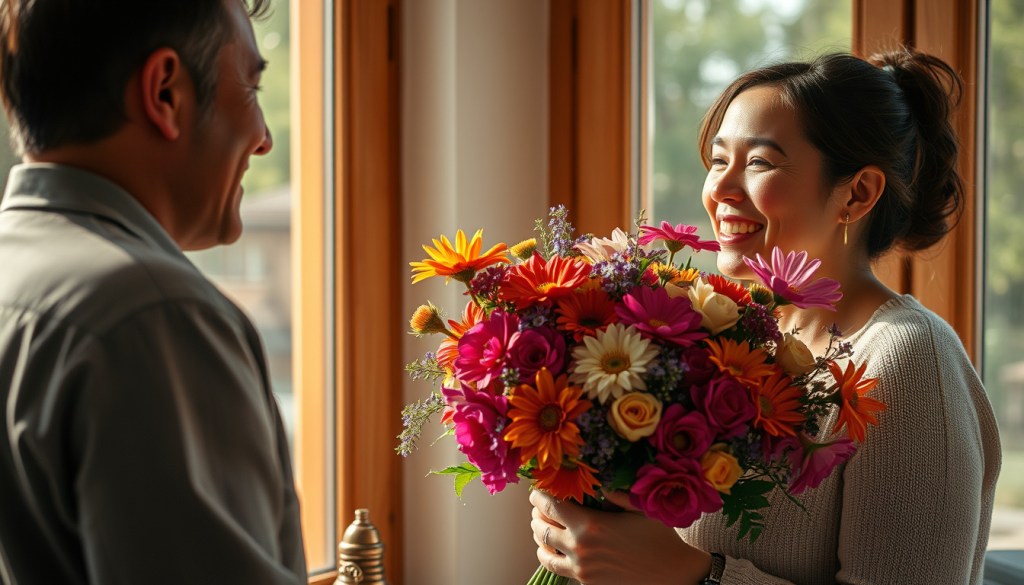
You might find yourself unsure what to say when someone hands you flowers because the moment can feel simultaneously personal and public. Flowers can mark celebrations, convey sympathy, or simply show affection, and that uncertainty about the occasion or the depth of feeling makes it hard to respond naturally.
Simple wording helps because it reduces pressure and keeps the focus on appreciation rather than on crafting a perfect reply. Short, genuine phrases are easy to deliver and still communicate respect for the giver and the gesture.
This article offers practical, ready-to-use phrases you can adapt to the situation, plus tips on what to avoid and how to handle the moment with poise.
Why This Moment Matters
Receiving flowers is a small ritual with outsized emotional meaning. For the giver, the act can be an attempt to bridge distance, express support, celebrate, or say sorry. For the receiver, it places you in a position of acknowledging someone’s attention and intentions, which can feel exposing, especially if emotions are involved.
How you respond shapes the interaction. A gracious reply affirms the giver and keeps the exchange comfortable. A hesitant or dismissive response can create awkwardness or leave the giver unsure about how their gesture landed. You don’t need elaborate language to get it right; a few thoughtful words convey gratitude and respect and often deepen connection.
Useful Things to Say
Simple Responses
- Thank you so much.
A clear, direct expression of gratitude that fits almost every situation. - They’re beautiful.
A short compliment that acknowledges the flowers themselves and the thought behind them. - That was kind of you.
A modest way to recognize the giver’s intention without overstating your feelings. - I appreciate this.
Neutral and sincere, useful when you want to acknowledge the gesture without drawing it out.
Supportive Responses
- This brightens my day—thank you.
Lets the giver know their effort had a positive effect and connects the gift to your mood. - I’ll put them somewhere we can enjoy them.
Practical and reassuring, showing you value the gift and plan to display it. - It means a lot that you thought of me.
Emphasizes the relational intent behind the flowers rather than just the object. - I’ll make sure they get watered and cared for.
A grounded response that shows respect for the giver’s choice and your responsibility to the gift.
Empathetic Responses
- Thank you—this is a comfort right now.
Suitable when flowers arrive during a difficult time and you want to acknowledge emotional support. - I’m really touched that you came by.
Acknowledges both the gesture and the giver’s presence, which is often what matters most. - I don’t have the words, but I’m grateful.
Honest and validating when emotion makes a polished response difficult. - These will help me through today—thank you for thinking of me.
Conveys that the flowers have practical emotional value and recognizes the giver’s empathy.
Light, Warm Responses
- You picked my favorites—how did you know?
A playful, personal reaction that invites warmth without being overly sentimental. - You didn’t have to, but I’m glad you did.
Balances appreciation with an easygoing tone that keeps the moment comfortable. - Let’s put them in a vase together.
Turns the gift into a small shared activity and can deepen the connection in a casual way. - They made my day—thank you for that.
Bright and sincere, appropriate for celebratory or everyday surprises.
What Not to Say
- Asking “How much did these cost?” — It shifts focus to money and can make the giver feel judged.
- Saying “I don’t like flowers” — Even if true, this dismisses the intent behind the gesture.
- Making a joke that minimizes the gift (e.g., “Are these for my plants?”) — It can come off as sarcastic or ungrateful.
- Comparing to someone else’s gift (“My friend gave me better ones.”) — Undermines the giver’s effort and creates unnecessary tension.
- Responding with silence or avoidance — Ignoring the gesture can leave the giver hurt or confused.
- Over-explaining your reaction (“I’m overwhelmed because…”) in a way that shifts attention away from the giver — Keep the initial reply focused on thanks.
Helpful Tips for Handling the Moment
- Keep your tone warm and steady; gratitude is easier to accept when your voice matches your words.
- Aim to respond promptly; a quick “thank you” in person is more meaningful than a delayed message.
- Use eye contact and a gentle smile to reinforce sincerity without requiring long speech.
- If you’re emotional, it’s okay to say so briefly and follow up later with a longer note or message.
- Respect boundaries: if you have allergies or can’t keep flowers, thank the giver and offer an alternative like placing them in a communal space or donating them.
- Consider a short follow-up note or message the next day to extend your appreciation and acknowledge the gesture again.
Final Thought
You don’t need the perfect phrase—honesty and warmth are enough. A simple, timely expression of thanks honors both the flowers and the person who gave them, and that genuine response will be remembered more than any polished line.
Let us know in the comments if this has helped or if you’ve got suggestions we can include
About the Author
Helen Bach is a relationship expert and writer who helps people find the right words when it matters most. She studied English and English Literature at the University of Michigan, where she developed a passion for how language shapes love, conflict, and connection.
At whattosaywhen.net, Helen writes clear, down-to-earth advice on what to say in real-life situations—from first dates and tough conversations to breakups and makeups. Her goal is simple: to make talking about feelings less awkward and a lot more honest.
 What to Say When
Leave a comment